
World Center for Strategic Studies
From closed analysis to public debate
POPULAR
- MONTH
- YEAR

Europe’s Energy Shield Still Has Cracks

Europe is safer than it was during the 2022 gas panic – but TEPSA warns that safer does not mean secure. The EU has cut Russian gas, diversified suppliers, filled storage more professionally and accelerated clean-energy deployment. That is real progress.
Europe’s Gas Reserve Chance: Romania Has The Fuel, Ukraine Has The Vault
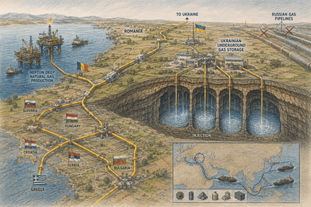
Romania is about to become one of Europe’s most important new gas players – and CEPA argues the EU should stop treating that as a narrow national windfall. With Black Sea production from the Neptun Deep project expected to start in 2027, Romania may have surplus gas at exactly the moment Europe is trying to finish its break with Russian supply.
NATO’s Spending Boom: Big Numbers, Bigger Doubts

NATO’s European members are finally spending serious money on defence. The IISS analysis says the rise is real, rapid and historically significant: European NATO budgets are expected to climb by almost 10 percent in 2026, reaching around $639 billion. Since Russia’s full-scale invasion of Ukraine, nominal spending has surged by more than 90 percent.
Britain’s Climate Reality Check: Fires Are Now An Economic Threat

Europe is burning, and Chatham House says Britain’s new government cannot treat this as another summer emergency. Record heatwaves, drought and wildfires have exposed a harsh truth: climate adaptation is still treated as a side issue when it should be at the centre of economic policy, public investment and foreign policy.
Europe’s Banking Humiliation: One US Giant Beats The EU’s Top Five

Europe has a banking problem it can no longer hide. Howard Davies’ Project Syndicate commentary points to a brutal comparison: the five biggest listed EU banks together are worth less on the stock market than America’s largest bank, JPMorgan Chase.
Europe’s Mining Dilemma: Dig For Independence, Risk A Backlash

Europe wants to break its dangerous dependence on China for the raw materials behind batteries, wind turbines, chips and weapons. The EUISS brief argues that enlargement partners – especially Ukraine and the Western Balkans – could help by supplying critical minerals that Europe badly needs for the green transition, digital industry and rearmament.
France’s Jobs Warning: Full Employment Promise Hits The Wall

France’s unemployment problem is creeping back – and the Institut Montaigne interview makes clear why politicians should stop pretending this is just a statistical blip. For the first time since 2021, unemployment has moved above 8 percent, with 2.6 million people affected.