World Center for Strategic Studies
From closed analysis to public debate

- MONTH
- YEAR

NATO’s Infrastructure Blind Spot: Russia Knows Where Europe Is Weak
NATO is preparing for war with Russia, but CEPA warns that one of the Alliance’s biggest vulnerabilities sits outside the traditional battlefield. Europe’s ports, railways, energy grids, undersea cables, pipelines, satellite links and digital networks are now part of deterrence – and too many remain exposed.
The article’s message is direct: modern defence depends on civilian infrastructure that NATO does not fully own, command or protect. Russia does not need to defeat the Alliance in a tank battle to cause chaos. It can disrupt the systems that move troops, power bases, connect economies and keep societies functioning.
This is the missing link in NATO’s defence posture: vulnerable infrastructure is no longer background. It is the front line.
Russia has found the grey zone
Moscow’s pressure campaign is built for ambiguity.
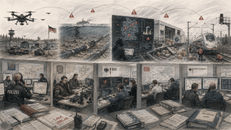
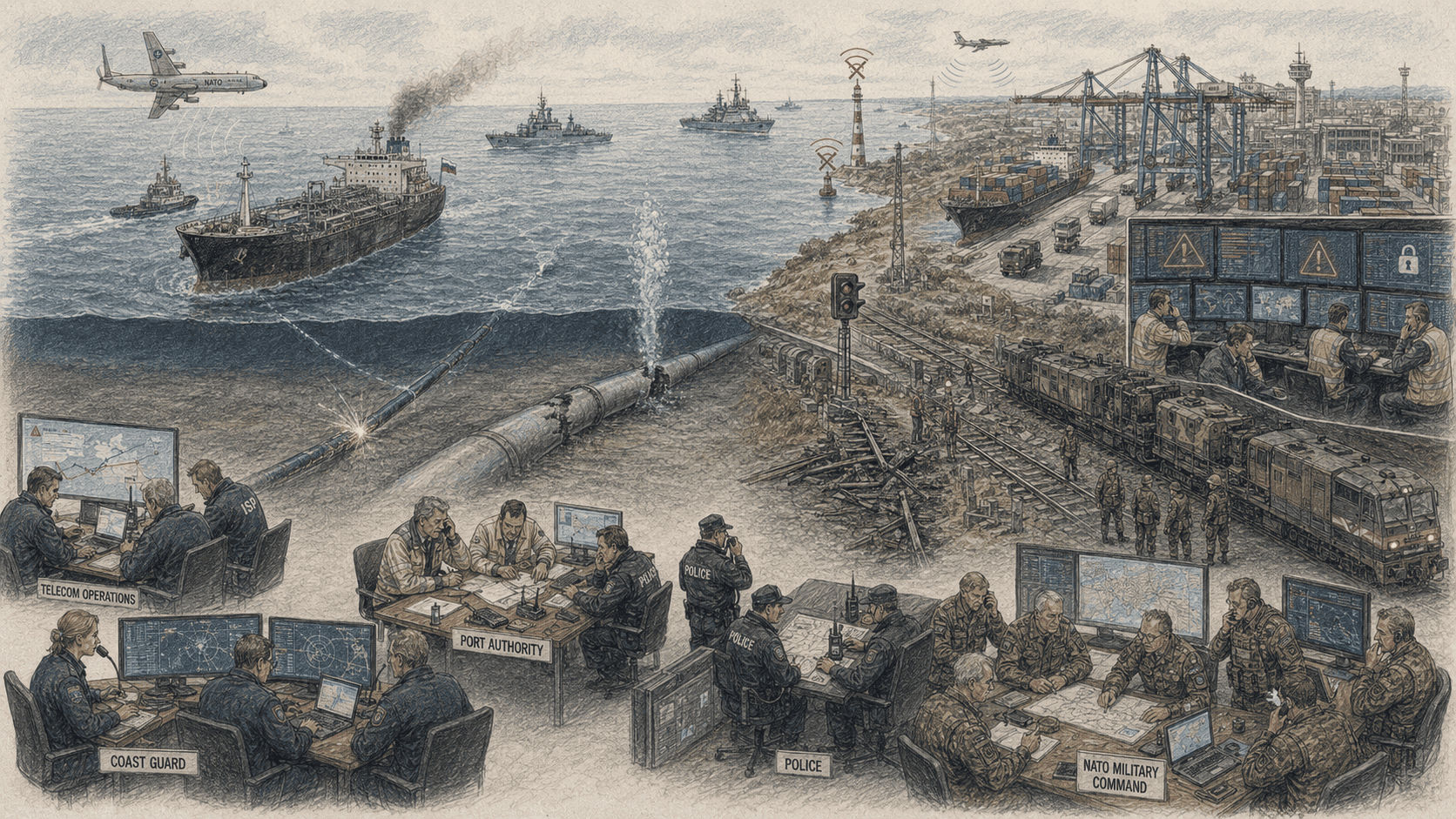
Sabotage, cyberattacks, GPS jamming, undersea-cable incidents, arson, espionage and intimidation can all sit below the threshold of open war. That makes response harder, slower and politically messier.
NATO’s Article 5 logic was built for clear attacks. Russia’s shadow-war tactics are designed to blur authorship, delay decisions and force allies into arguments over evidence, escalation and proportionality.
That is the danger. The Alliance may be militarily strong but politically slow in the grey zone.
Civilian systems carry military power
The uncomfortable fact is that NATO’s armies depend heavily on civilian infrastructure.
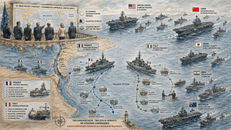
Troops need commercial ports, railways, roads, telecoms networks, fuel systems, electricity grids and private logistics firms. During large operations, much military movement depends on civilian assets that may be chartered, requisitioned or coordinated with industry.
That means a weak bridge, hacked port, disabled railway hub or damaged cable can become a military problem fast.
Europe’s defence plans are only as strong as the civilian systems beneath them.
The private sector owns the battlefield
One of the hardest problems is ownership.
Much critical infrastructure is not run by defence ministries. It is owned by companies, utilities, telecom operators, port authorities, energy firms and technology providers. Governments need them in a crisis, but do not always share enough information, set clear priorities or integrate them into defence planning.
That creates a gap between military need and commercial reality.
A company may see risk management. NATO sees operational survival. Those two worlds still do not connect tightly enough.
The Baltic warning is flashing
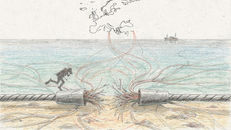
The Baltic Sea has become a live demonstration of the problem.
Undersea cables, pipelines, ports and energy links are all vital to regional security. They are also hard to monitor, easy to damage and expensive to protect. Shadow-fleet vessels, suspected sabotage and unexplained infrastructure incidents have made the threat impossible to ignore.
NATO has increased attention, but CEPA’s warning is that exercises, surveillance and response planning still need to go much deeper.
The Baltic is not an exception. It is the preview.
Europe cannot repair under fire
The real test is not whether infrastructure can be defended perfectly. It cannot.
The test is whether Europe can absorb hits, reroute traffic, restore services and keep military movement going while under pressure. That requires redundancy, repair capacity, spare parts, pre-agreed emergency powers, secure communications and rehearsed public-private coordination.
Right now, too much of Europe still relies on normal-time assumptions.
Russia’s bet is that disruption will produce panic faster than NATO can restore function.
NATO and the EU must stop pretending this is separate
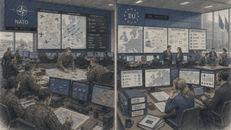
The article points straight at the institutional problem. NATO has the military planning role. The EU has regulation, infrastructure funding, market rules and many civilian-security tools. National governments hold legal powers. Companies operate the assets.
No single actor owns the whole problem.
That means protection will fail if everyone stays in their lane. Infrastructure resilience needs joint planning, shared threat intelligence, stress tests, exercises and investment priorities that link military mobility with civilian continuity.
This is where Europe’s old bureaucratic fragmentation becomes a security risk.
Deterrence needs punishment and protection
Shielding infrastructure is not only about hardening cables and guarding ports. It is also about making Russia believe attacks will carry costs.
That means attribution capacity, faster political decision-making, clearer response options and a willingness to impose consequences for grey-zone operations. If sabotage remains cheap, deniable and low-risk, Moscow has every reason to keep using it.
Protection without deterrence becomes an endless repair bill.
The weakness rivals will exploit
Critical infrastructure is attractive precisely because it hits many targets at once.
A port cyberattack can slow military reinforcement and damage trade. A cable cut can disrupt communications and financial flows. A pipeline incident can raise energy prices and public anxiety. A rail disruption can delay troops and anger voters.
That is why infrastructure security is now strategic security.
Europe’s enemies understand this. Europe is still catching up.
The verdict: NATO cannot defend Europe if the pipes, ports and cables fail
CEPA’s warning is that NATO’s defence posture has a missing link. The Alliance can buy tanks, aircraft and missiles, but those forces still depend on civilian systems that are exposed to sabotage, cyberattack and disruption.
Europe’s critical infrastructure is no longer just economic plumbing. It is the skeleton of deterrence.
If NATO and the EU cannot protect it, repair it and keep it functioning under attack, Russia will not need to break the Alliance head-on.
It can squeeze the weak points underneath.