
World Center for Strategic Studies
From closed analysis to public debate
POPULAR
- MONTH
- YEAR

Europe’s Real Crisis: Falling Behind While Others Race Ahead
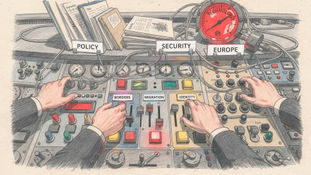
Europe keeps arguing about borders while quietly losing the future.
This Project Syndicate argument by Nouriel Roubini says immigration is not Europe’s core problem – technological backwardness is.
While the US and China pour money into AI, chips and advanced industry, Europe dithers, regulates and congratulates itself for caution.
The gap is no longer theoretical. It is showing up in growth, productivity and power.
Europe is not overwhelmed by outsiders – it is being outpaced by rivals.
France’s Power Paradox: Big Ambitions, Shrinking Control
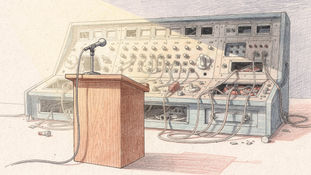
France talks like a heavyweight but increasingly plays like a constrained middle power.
This Centre for European Reform analysis lays out an uncomfortable contradiction – Paris wants global influence, strategic autonomy and leadership in Europe, yet its room for manoeuvre is tightening fast.
Economic strain, industrial limits and hard geopolitical realities are cutting into France’s claims of independence.
Europe’s Hiring Freeze: AI Fear Meets Economic Rot

Europe’s labour market is losing its nerve – and the cracks are starting to show.
This Deutsche Welle report, drawing on expert views from the Centre for European Reform, says firms are quietly hitting the brakes on hiring as growth sags and AI creeps into everyday work.
After a brief post-pandemic moment when workers held the power, the mood has flipped – fewer vacancies, weaker industry and rising anxiety about automation.
Europe’s economic backbone is cracking: supply-chain resilience is now a security necessity

This IISS online analysis argues that resilient supply chains are no longer a technical or efficiency issue – they are the foundation of economic and national security. Pandemics, wars and export controls have exposed Europe’s vulnerabilities in global value chains, turning cost-focused systems into strategic liabilities. The debate is now about how much resilience is enough, and whether Europe can build it at the speed and scale the world’s geopolitical pressures demand.
Europe’s mineral Achilles’ heel: the EU still can’t shake China’s grip on critical resources
This IISS strategic commentary exposes a core vulnerability at the heart of Europe’s industrial and technological ambitions. As the EU pushes clean tech, defence production and digital infrastructure, it remains heavily dependent on China for critical minerals and processing capacity. Despite loud talk of “de-risking”, Europe still relies on Chinese-controlled supply chains that can be tightened or weaponised at any moment.
Europe’s ambition is at risk: the EU can’t match internal reform with external plans
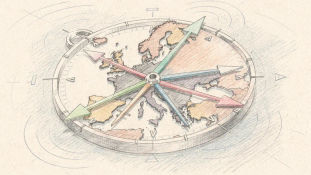
This CIDOB analysis questions whether the EU has lost its sense of direction by trying to balance big external ambitions with slow internal reform. Europe talks about strategic autonomy, competitiveness and global influence, but its internal economic, regulatory and institutional weaknesses make these ambitions hard to realise. The text suggests a growing mismatch: the EU wants to shape the world, but it cannot fix the fundamentals at home. If this gap persists, Europe’s global role will weaken and its economy will stagnate.
Europe’s green transition could be hijacked: China is tightening its grip on clean tech
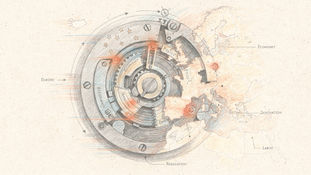
This Institut Montaigne analysis warns that Europe’s clean-tech ambitions rest on a fragile foundation. While the EU pushes ahead with decarbonisation, much of the technology powering the green transition remains dominated by Chinese firms and value chains. Batteries, solar panels and other core components are still produced at scale in China, while European companies face barriers abroad. The risk is stark: Europe may end up financing a green transition it does not control.