World Center for Strategic Studies
From closed analysis to public debate
- MONTH
- YEAR

France’s Strategic Illusion: A Nuclear Power Still Dependent on Others
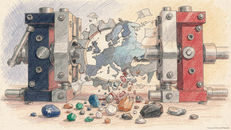
France likes to present itself as Europe’s most sovereign major power – a nuclear state with global military reach, an independent foreign policy tradition and ambitions to lead Europe in an increasingly unstable world. The RUSI analysis argues that this image masks a more uncomfortable reality: France’s power rests on a web of dependencies that could become serious vulnerabilities during a major crisis.
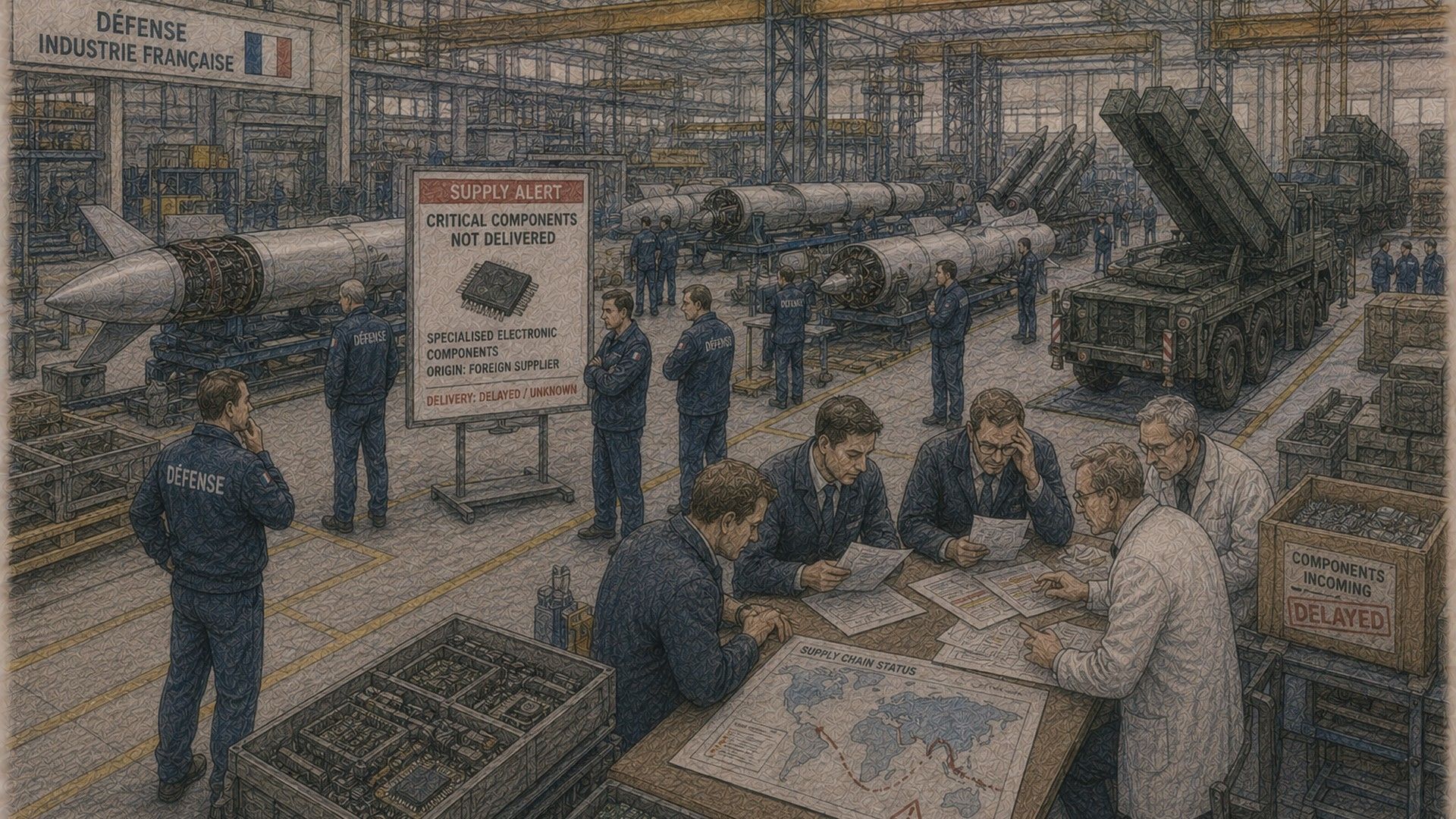
The paper challenges the idea that strategic autonomy can be measured simply by military strength or political ambition. Beneath the surface, France remains reliant on foreign supply chains, critical technologies, industrial inputs and international partnerships that it does not fully control.
The warning is clear. France may be stronger than many European states, but it is far less independent than it likes to believe.
The myth of complete autonomy
French strategic thinking has long been built around the concept of sovereignty. Nuclear weapons, an independent defence industry and a permanent seat on the UN Security Council all reinforce the image of a country capable of acting alone when necessary.
The RUSI assessment argues that this vision increasingly collides with reality. Modern military power depends on vast networks of suppliers, technology providers, logistics systems and international markets.
Even countries with advanced armed forces struggle to operate without access to global industrial ecosystems.
France is no exception.
Critical supply chains remain exposed
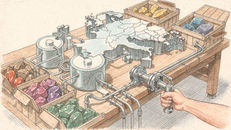
One of the central concerns is dependence on foreign-produced components, raw materials and industrial capabilities that support French military and economic power.
Modern weapons systems require semiconductors, specialised materials and complex manufacturing networks that often stretch far beyond national borders. Disruptions caused by conflict, sanctions or geopolitical tensions could therefore affect French capabilities more quickly than many policymakers assume.
The lesson is uncomfortable: possessing advanced weapons matters less if the supply chains behind them become vulnerable.
Strategic power needs industrial depth
The report highlights a broader challenge facing Western states. For decades, efficiency and globalisation encouraged governments to rely on international production networks.
That model delivered lower costs but created new dependencies. As geopolitical competition intensifies, countries are rediscovering the importance of domestic industrial resilience, stockpiles and secure access to critical materials.
France has ambitious defence plans, but sustaining military power during a prolonged confrontation requires industrial capacity that cannot be improvised once a crisis begins.
The test is not what France can build in peacetime. It is what France can sustain under pressure.
China and global markets hold leverage
A recurring theme is the role of external economic dependencies. Like many advanced economies, France relies on global trade and access to critical goods produced elsewhere.
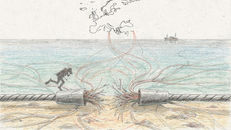
This creates opportunities for rivals to exert pressure without firing a shot. Supply restrictions, export controls and industrial disruptions can generate strategic effects that traditional military planning often underestimates.
The analysis suggests that economic interdependence is increasingly becoming a battlefield in its own right.
Military strength alone is not enough
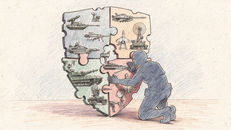
France possesses one of Europe’s most capable armed forces, but the report argues that military assets cannot compensate for structural weaknesses elsewhere.
A country may field nuclear weapons, advanced aircraft and expeditionary forces, yet still face serious constraints if industrial production, technological supply chains or critical imports are disrupted.
The challenge is therefore broader than defence policy. It extends into trade, industry, technology and economic security.
Power today depends on far more than armies.
Europe faces the same problem
Although focused on France, the assessment reflects a wider European dilemma. Governments across the continent increasingly speak about strategic autonomy while remaining deeply embedded in global systems they cannot fully control.
The gap between geopolitical ambition and industrial reality remains one of Europe’s biggest vulnerabilities. Leaders want greater independence, but decades of integration have created dependencies that are difficult and expensive to unwind.
France may be the case study, but the problem is continental.
The big warning: Sovereignty is weaker than it looks
The RUSI analysis is ultimately a challenge to comforting assumptions. France remains a major military and diplomatic power, yet many of the foundations supporting that power depend on systems beyond French control.
That does not mean France is weak. It means resilience, not prestige, may become the decisive measure of power in the years ahead.
The uncomfortable lesson is that strategic autonomy cannot simply be declared. It has to be built, supplied and sustained.
And when the next major crisis arrives, France may discover that dependence is far harder to escape than influence is to project.