World Center for Strategic Studies
From closed analysis to public debate

- MONTH
- YEAR

Europe’s Hidden Migration Scandal
Europe’s migration debate is dominated by border fences, asylum numbers and political battles. The DIIS study argues that one of the worst aspects of the migration system remains largely ignored: the industrial-scale sexual violence suffered by migrants travelling along African-European routes.
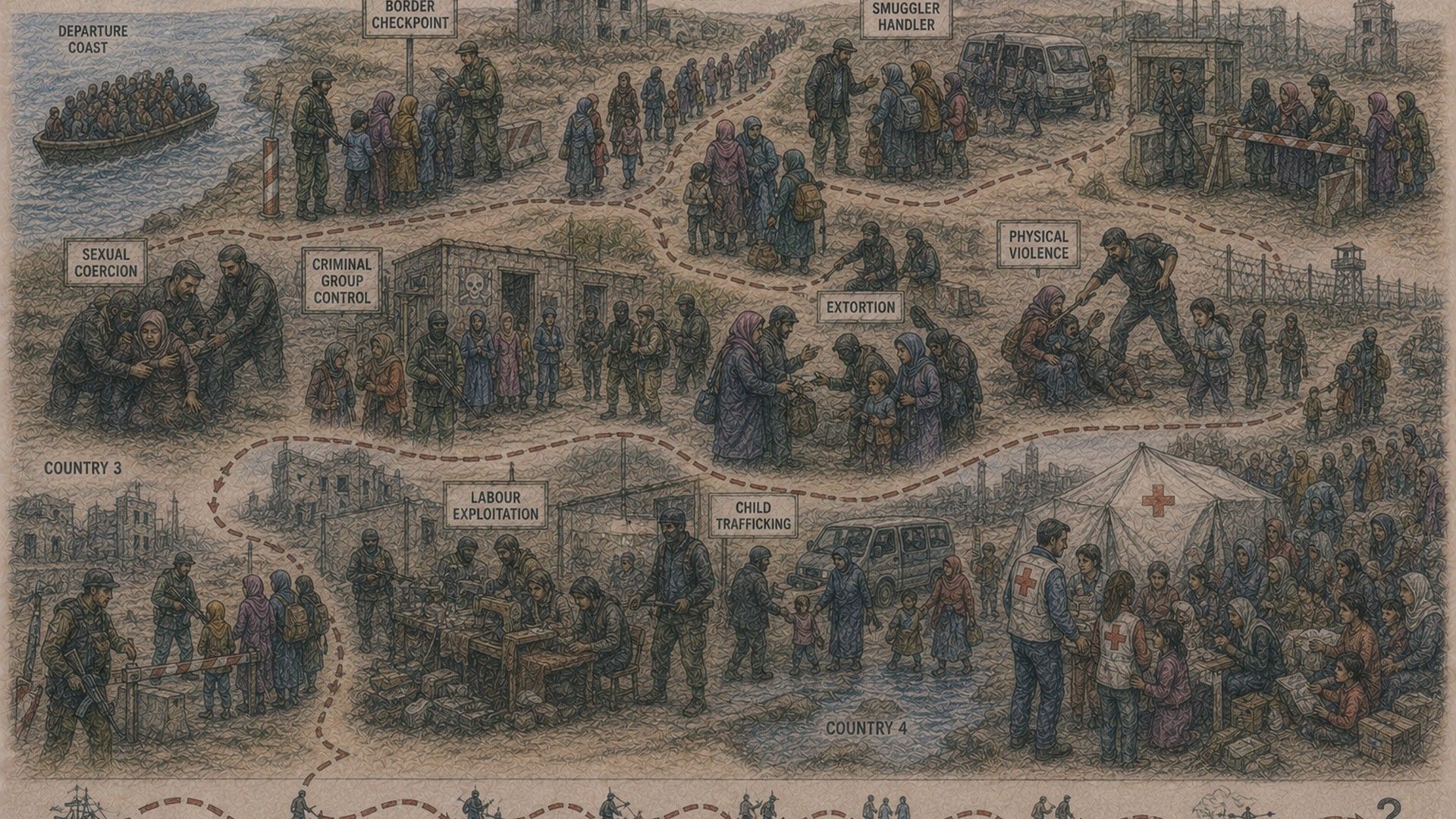
The report paints a deeply disturbing picture. Women and girls moving towards Europe face a level of abuse so widespread that sexual violence has effectively become part of the migration journey itself. Yet despite years of evidence, humanitarian organisations, governments and international institutions have struggled to make the issue a political priority.
The study’s warning is uncomfortable. While Europe argues about migration management, one of the most brutal realities of the system continues largely in the shadows.
A route built on fear
The Central Mediterranean route is already known as one of the world's deadliest migration corridors. But the report argues that physical danger is only part of the story.
For many women, the journey involves repeated exposure to sexual assault, coercion and exploitation across multiple countries and transit points. The violence is not confined to isolated incidents. According to the study, it is systematic, predictable and deeply embedded in the migration infrastructure itself.
The journey to Europe can become a chain of abuse long before migrants ever reach a European border.
The numbers are devastating
One of the most shocking findings concerns the scale of the violence. The report notes that between 50 and 90 per cent of women experience sexual violence during migration, while in some settings the figure approaches universality.
These are not marginal cases affecting a small minority. They point to a humanitarian disaster affecting enormous numbers of vulnerable people moving through migration routes linked directly to Europe.
The sheer prevalence of abuse raises difficult questions about how long policymakers have known about the problem without generating a stronger response.
The perpetrators operate with impunity
The violence comes from multiple directions. Smugglers, traffickers, armed groups, criminal networks and other actors operating along migration routes all feature in accounts gathered by researchers.
What makes the situation especially alarming is the lack of accountability. The report argues that perpetrators rarely face consequences, while victims often lack access to protection, justice or long-term support.
The result is an environment where abuse becomes normalised because the risks for offenders remain low.
Europe focuses on borders, not victims
The study suggests that migration policy has become heavily concentrated on controlling movement while giving far less attention to the violence migrants experience during transit.
Political debates often revolve around arrivals, deterrence and border enforcement. Meanwhile, the humanitarian consequences unfolding along migration routes receive far less sustained attention.
This creates a major blind spot. Governments spend billions discussing who reaches Europe while paying less attention to what happens to people before they arrive.
A crisis hidden in plain sight
Perhaps the report’s most striking argument is that none of this is actually new. Evidence of widespread sexual violence along migration routes has existed for years.
Humanitarian organisations, researchers and survivors have repeatedly documented the problem. Yet despite extensive documentation, the issue has never become a central political priority. Humanitarian responses remain limited and legal accountability remains rare.
The crisis is hidden not because information is unavailable, but because attention has been directed elsewhere.
The weakness Europe prefers not to discuss
The findings expose a broader failure inside European migration governance. Policymakers often present migration management as a question of numbers, borders and enforcement.
The report forces attention onto a harsher reality: migration routes can function as spaces of extreme violence where vulnerable people are routinely exposed to abuse with little protection.
That creates a moral and political challenge that border controls alone cannot solve.
The warning sign: The human cost keeps being ignored
The DIIS study is not primarily about migration flows. It is about what happens when violence becomes a routine feature of a system that governments struggle to control.
Europe’s migration debate is often dominated by statistics, crossings and political arguments. This report redirects attention to the people caught inside the machinery.
Its central message is difficult to escape: one of the gravest humanitarian crises linked to migration is no longer hidden because nobody knows about it.
It remains hidden because too few people have treated it as a priority.