
World Center for Strategic Studies
From closed analysis to public debate

- MONTH
- YEAR

Britain Pays Again: Europe’s Migrant Border Failure Gets a New Price Tag
A new UK–France migration deal is being sold as a breakthrough. In reality, it is another expensive attempt to contain a crisis that neither side has managed to stop. London will hand over up to £660 million to France over three years to curb small-boat crossings, with part of the money tied to results.
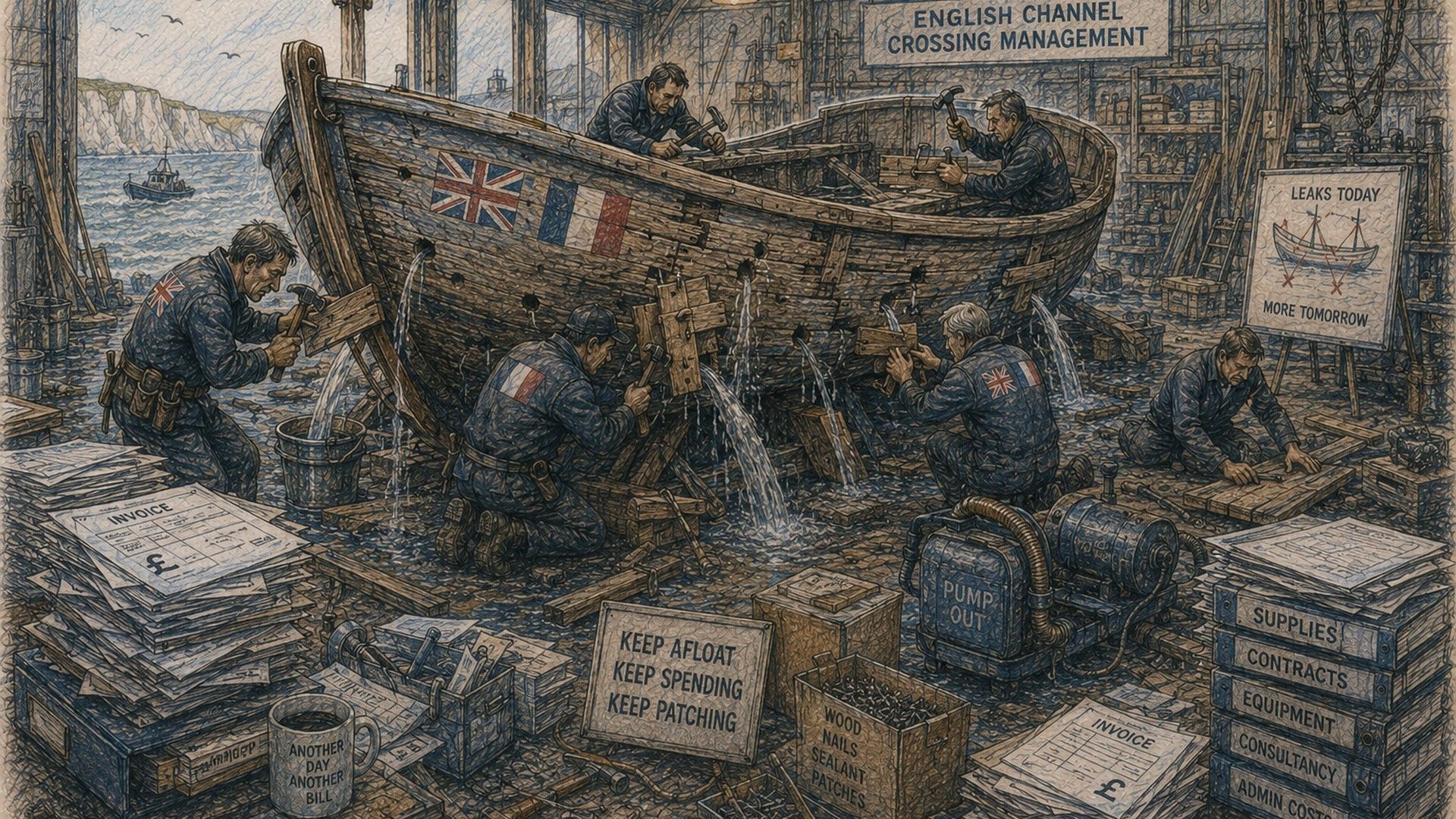
The agreement exposes a deeper problem running through Europe’s migration system. Despite years of summits, funding packages, police operations and political promises, illegal crossings continue, smuggling networks adapt and governments keep paying more to manage consequences rather than solve causes.
The message behind the deal is stark: Europe is still struggling to control its own borders.
More money, same problem
The new funding package comes after previous agreements worth hundreds of millions of pounds failed to stop Channel crossings. Migrant arrivals remain at historically high levels despite years of reinforced patrols, surveillance systems and joint operations.
British officials argue the latest package is different because some funding depends on measurable outcomes. That reflects growing frustration in London over repeatedly paying for enforcement while crossings continue.
The fact that “payment by results” became a negotiating battle shows how little confidence remains that existing methods are working.
The border industry keeps expanding
The agreement dramatically increases personnel, surveillance technology and enforcement capacity across northern France. More police, more intelligence officers, more drones and more monitoring systems will now be deployed.
A new detention infrastructure is also being built around Dunkirk to intercept and remove migrants before they reach Britain.
Yet the constant expansion of border operations highlights a difficult reality. Europe’s migration control system keeps growing in size and cost because the underlying pressure never disappears.
Smugglers adapt faster
Every new enforcement measure seems to trigger a new workaround. As police pressure increased along parts of the French coast, smugglers shifted tactics, using “taxi boats” and exploring new launch points, including routes through Belgium.
This has become one of Europe’s recurring migration failures. Governments invest heavily in blocking one route, only to watch networks move elsewhere.
The system remains reactive while trafficking groups remain flexible.
Britain demands results – Paris resists
The negotiations revealed tensions that neither government can fully hide. British officials wanted stricter performance conditions attached to funding. French officials pushed back, citing operational realities, safety concerns and sovereignty issues.
That dispute exposed the limits of European co-operation. Both sides agree the crossings are politically damaging. Both sides want fewer arrivals. Yet even then, arguments emerge over responsibility, metrics and who should carry the burden.
The result is a partnership built as much on mutual frustration as mutual trust.
This will fuel political backlash
Migration remains one of the most explosive political issues on both sides of the Channel. Every new boat arrival feeds pressure on governments already facing voter anger over border control, asylum systems and public spending.
The deal is therefore about more than security. It is an attempt to reassure voters that governments still have control.
That is precisely why failure would be so politically costly.
The weakness rivals exploit
The wider European vulnerability remains unchanged. Smuggling networks continue to profit because demand remains high, legal pathways remain limited and asylum systems remain fragmented.
Countries spend billions reinforcing borders while struggling to build a coherent migration strategy that works across the continent.
The gap between enforcement promises and real-world outcomes has become one of Europe’s biggest credibility problems.
The verdict: Europe keeps paying for unfinished solutions
The new UK–France agreement may reduce crossings, improve surveillance and disrupt some smuggling operations. But it also reveals how trapped Europe has become inside a cycle of emergency management.
Each new deal is presented as a turning point. Each new funding package promises stronger control. Yet the crisis repeatedly returns in a different form.
The uncomfortable reality is that Europe is spending ever larger sums defending borders that still look vulnerable.